
Racing on the Floor of the Mojave
How Southern California's dry lakes became the first great proving ground of American hot rodding.
Illustrative image · AI-generated, not a historical photograph
Long before there were drag strips or sanctioned speed weeks, there was the desert. North and east of Los Angeles, the Mojave holds a series of dry lakebeds — wide, flat, hard-packed expanses of clay that turn to a near-perfect running surface in the dry months. By the late 1920s and early 1930s, young men with modified Fords had discovered that these lakes offered something no public road could: room to run flat out.
Muroc Dry Lake was among the most famous early sites. Racers would drive out from the city, often in the same cars they intended to race, and spend the day making timed runs. Early gatherings were loosely organized, and safety was largely a matter of individual judgment.
From chaos to clubs
As the crowds grew, so did the need for structure. Local car clubs began working together to time runs consistently and to establish classes so that similar cars competed against each other. In 1937, a group of these clubs formed the Southern California Timing Association — the SCTA — to organize and standardize dry lakes competition.
The military's expanding use of Muroc in the years around World War II pushed racers to other lakebeds, most notably El Mirage, which remains an SCTA venue today. Racing largely paused during the war, then returned with new energy as servicemen came home with mechanical training and a taste for speed.
Why it mattered
The dry lakes created a feedback loop that would define hot rodding: build, test, measure, improve. That loop drove demand for better manifolds, cylinder heads, camshafts, and ignition parts — the seeds of the performance aftermarket covered elsewhere in this publication.
About this story
This is a sample feature prepared for the HotRodHistory.com demonstration. It summarizes widely documented events and contains no quotations attributed to historical figures. Dates and details should be confirmed against primary sources before publication. The image above is an AI-generated illustration, not a historical photograph.
Next story
Bonneville and the First Speed Week
More from West Coast
 Illustration
Bonneville and the First Speed Week
In 1949, the SCTA took hot rodders to the Utah salt — and created an annual pilgrimage that endures today.
Read · 5 min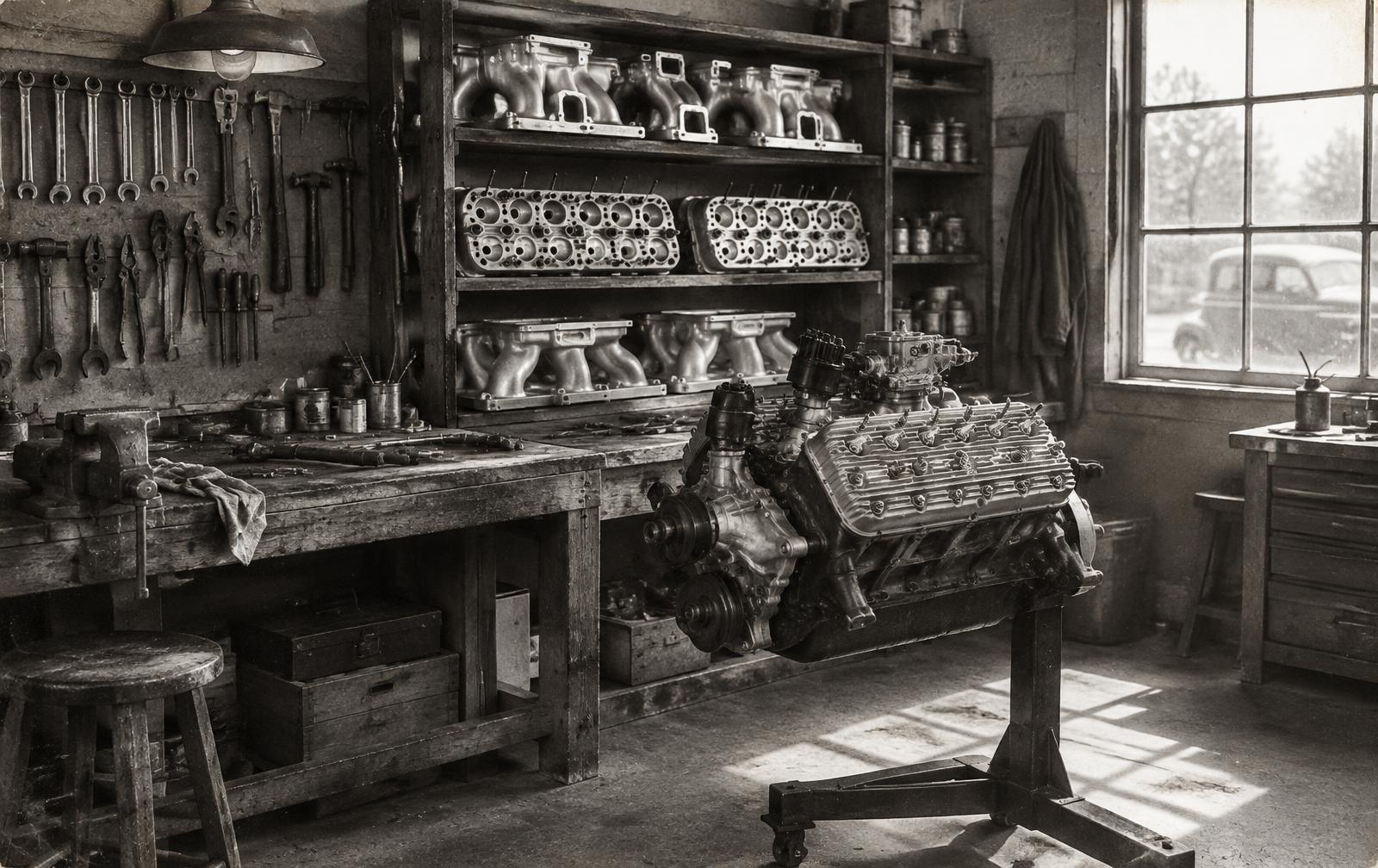 Illustration
1948: A Magazine Gives Hot Rodding a Voice
Robert E. Petersen and Robert Lindsay launched Hot Rod magazine — and helped change how the public saw the hobby.
Read · 4 min Illustration
From Print to Pixels: Hot Rodding Goes Digital
Half a century after Hot Rod magazine, the internet opened a new chapter in automotive publishing.
Read · 2 min