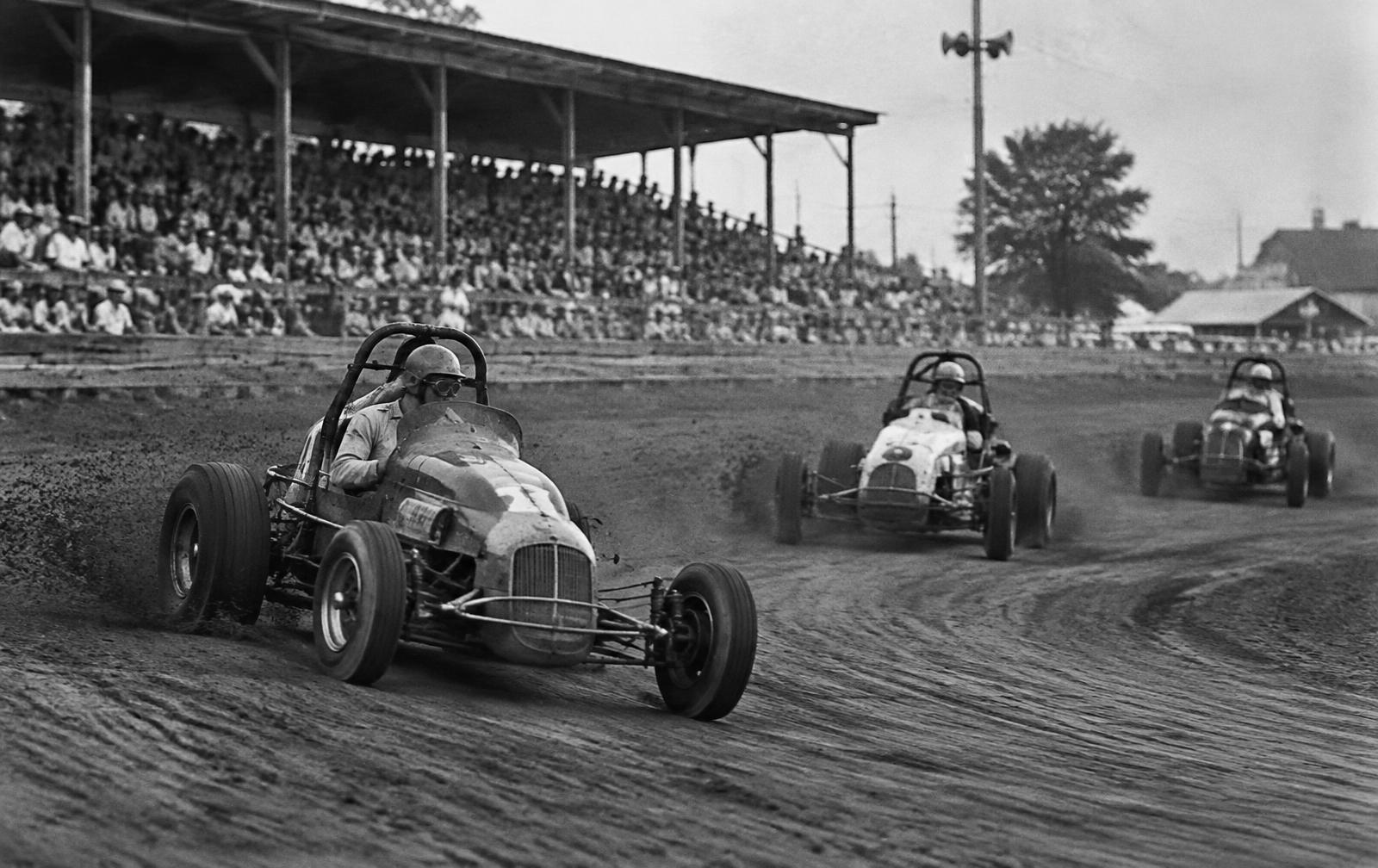
The County Fair Proving Ground
Half-mile horse tracks became the classrooms of Midwestern auto racing.
Illustrative image · AI-generated, not a historical photograph
Nearly every county seat in the Midwest had a fairground, and nearly every fairground had a dirt oval built for harness racing. Those tracks — usually a half mile or a mile around — were ready-made venues for automobile racing, complete with grandstands and crowds already gathered for the fair.
The International Motor Contest Association, founded in 1915, became one of the best-known sanctioning bodies for fairground racing. It remains active today, making it one of the oldest auto racing organizations still operating in the United States.
Learning by doing
Dirt track racing rewarded mechanical sense as much as courage. Chassis setup, tire choice, and engine reliability over a long race all mattered. Local mechanics who could make a car handle on a rough, changing surface earned reputations that spread from town to town.
Over time, the cars evolved into distinct types — from early "big cars" to sprint cars, midgets, and modifieds — each with its own following and its own demand for specialized parts.
About this story
This is a sample feature prepared for the HotRodHistory.com demonstration. It summarizes widely documented events and contains no quotations attributed to historical figures. Dates and details should be confirmed against primary sources before publication. The image above is an AI-generated illustration, not a historical photograph.
Next story
Sprint Cars and the Road to Knoxville
More from Midwest
 Illustration
Speedy Bill Smith and Speedway Motors
From a small shop in Lincoln, Nebraska, a racer built one of America's best-known performance parts companies.
Read · 5 minIllustrationSprint Cars and the Road to Knoxville
Lightweight, powerful, and ferociously fast on dirt — the sprint car became the Midwest's signature race car.
Read · 5 min