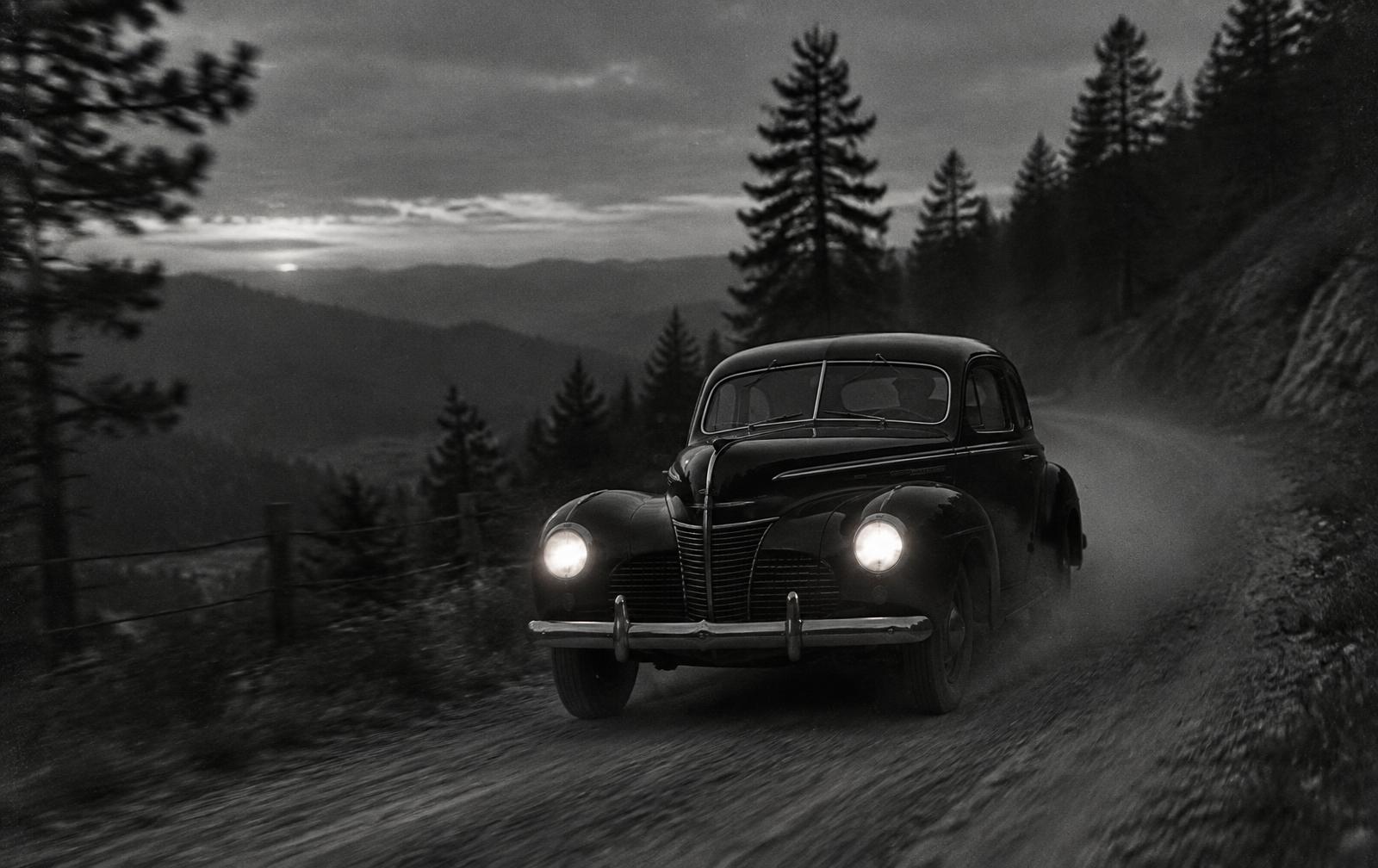
Moonshine Runners and the Roots of Stock Car Racing
Ordinary-looking cars, extraordinary engines, and the back roads where stock car skills were born.
Illustrative image · AI-generated, not a historical photograph
National Prohibition began in 1920 and ended with the ratification of the Twenty-first Amendment in 1933. But illegal liquor did not disappear with repeal. In parts of the rural South, untaxed "moonshine" remained a profitable trade for decades, and moving it meant evading revenue agents and local law enforcement.
The ideal delivery car looked like any other family sedan or coupe. Underneath, it might have a stronger engine, heavier-duty suspension to carry a load, and a driver who knew every curve of the local roads by heart.
From the road to the track
Drivers and mechanics with these skills began racing each other at local dirt tracks, and promoters found eager crowds. Several drivers who became stars of early stock car racing had family or personal connections to the liquor trade.
The best-known example is Junior Johnson of Wilkes County, North Carolina. Johnson was convicted in 1956 of operating an illegal still and served time in federal prison before becoming one of NASCAR's most successful drivers and, later, team owners. He received a presidential pardon from Ronald Reagan in 1986.
About this story
This is a sample feature prepared for the HotRodHistory.com demonstration. It summarizes widely documented events and contains no quotations attributed to historical figures. Dates and details should be confirmed against primary sources before publication. The image above is an AI-generated illustration, not a historical photograph.
Next story
Daytona Beach: Racing on the Sand
More from The South
 Illustration
Daytona Beach: Racing on the Sand
From land speed records to the beach-road course, the Florida shore was racing's original superspeedway.
Read · 6 minIllustrationBill France Sr. and the Founding of NASCAR
A series of meetings at a Daytona Beach hotel in December 1947 produced the most successful stock car organization in history.
Read · 6 min